How an Advisory Board Revolutionizes Go-to-Market: From Reactive Growth to Structured Growth
Structure your strategic decisions and turn your Go-to-Market into a sustainable scalability engine with an Advisory Board.
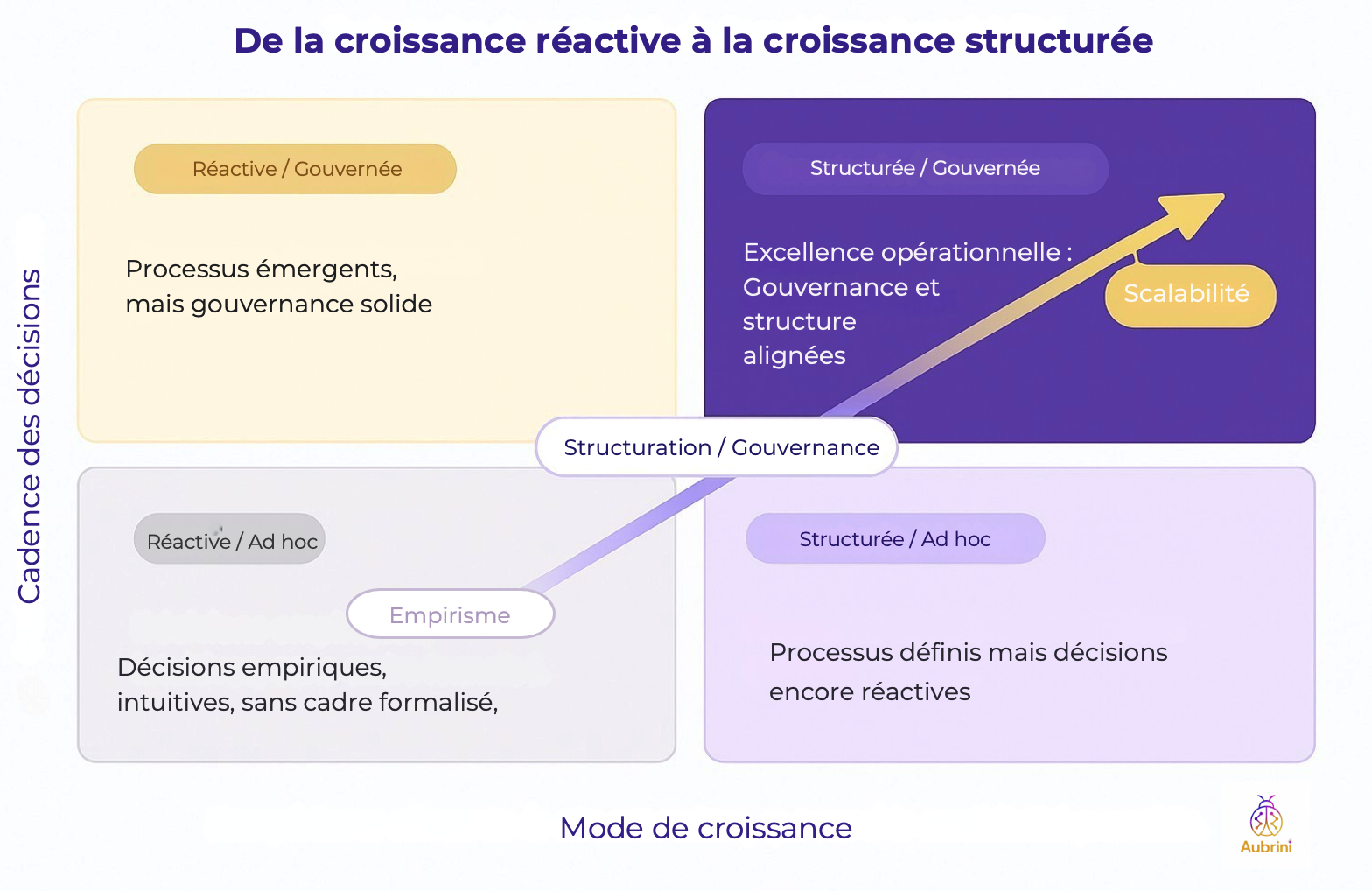
The turning point of reactive growth
Many expert-driven companies built their success on the ability to respond quickly to the market. They grew through demand, thanks to strong reactivity and unmatched customer proximity.
But this model reaches its limits: dispersion, blurred trade-offs, short-termist steering. Leaders then feel a paradoxical tension: continuing to grow requires changing governance, not just strategy.
Moving to structured growth doesn't mean giving up agility. It means putting in place a steering framework that aligns vision, decisions and sustainable performance.
This is precisely where the Advisory Board comes in — an external, agile governance lever that turns Go-to-Market into a scalability engine.
Scalability vs growth: a matter of governance
Many companies confuse growth and scalability. Growing means doing more. Scaling means changing scale without changing essence — in other words, structuring growth so it holds over time.
The moment a company decides to "scale" often reveals a blind spot: who governs growth?
A well-constituted Advisory Board then becomes a genuine operational governance body. It doesn't decide in place of management, but structures strategic thinking without slowing down action. Its value depends above all on the quality and neutrality of its external members — those who dare to challenge, question and anticipate.
The risks of scaling up
Everyone wants to scale, few companies truly prepare for it. Here are the symptoms of a Go-to-Market that has reached its limits:
- loss of focus on the right segments,
- opportunistic decisions,
- dependence on a few key customers,
- misalignment between product vision and commercial dynamics.
What research on scalability reveals
According to La Fabrique by CA, five key factors condition scalability:
- Clear strategic alignment between partners. → The Advisory Board ensures this alignment around the "why" of the GTM.
- Industrializing without losing agility. → It helps formalize processes without stifling commercial innovation.
- Culture of collaboration and transparency. → It creates a space where tensions become productive.
- Steering routines. → It sets up decision and reporting cycles adapted to growth.
- Anticipation of technological and regulatory risks. → A critical area for tech, SaaS or finance companies.
The role of the Advisory Board in transforming Go-to-Market
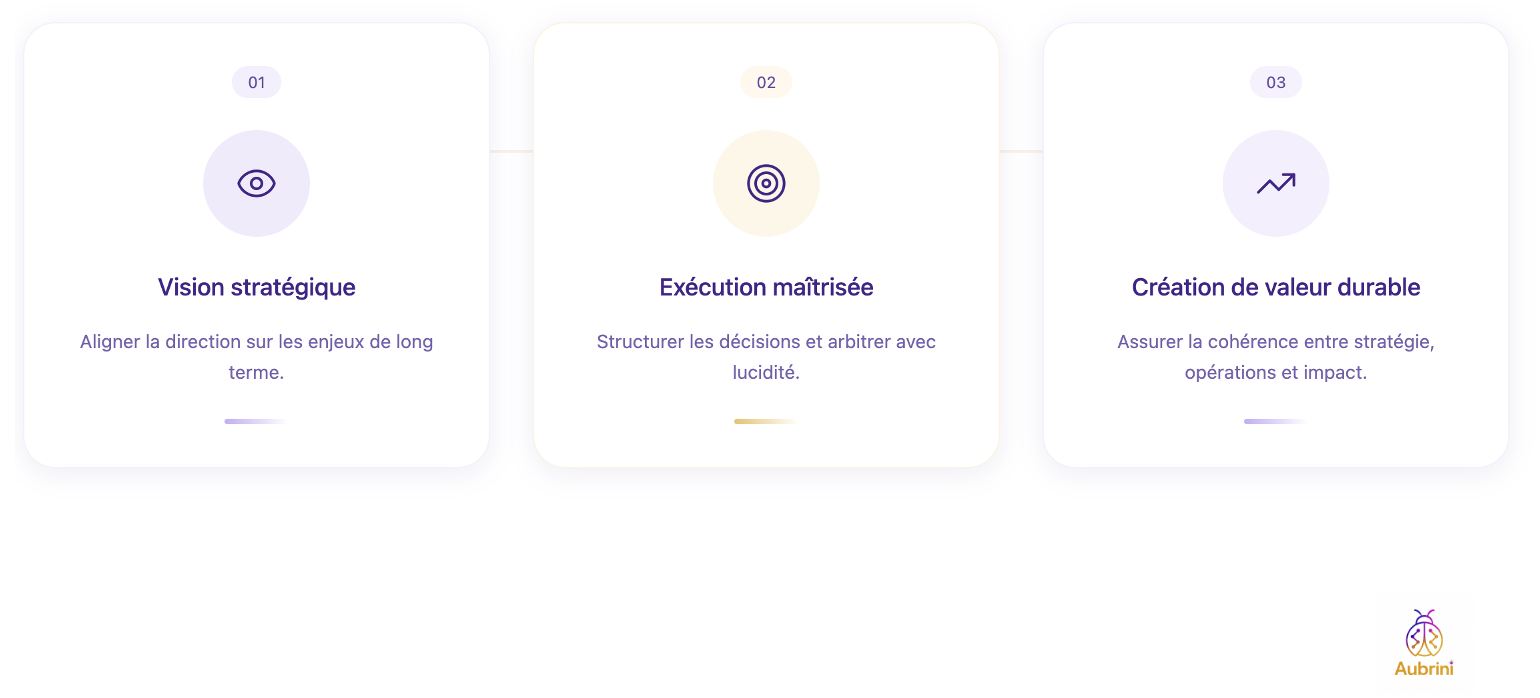
1. Strategic vision
Ensure that Go-to-Market remains aligned with customer value, profitability and long-term ROI. Avoid opportunistic drift: scaling without a clear reason.
2. Controlled execution
Set up steering routines (monthly reviews, KPIs, Go/No Go) that foster fast decision-making and consistent action.
3. Sustainable value creation
Identify what should be internalized or outsourced, assess organizational, financial and technological readiness before accelerating.
When the board becomes a "stress inducer"
In a study published in the Journal of Management and Governance (Sievinen, Ikäheimonen & Pihkala, 2019), researchers followed a century-old Finnish family business in the midst of stagnation. Their discovery?
The real driver of change was not a crisis, but the evolution of the role of external directors.
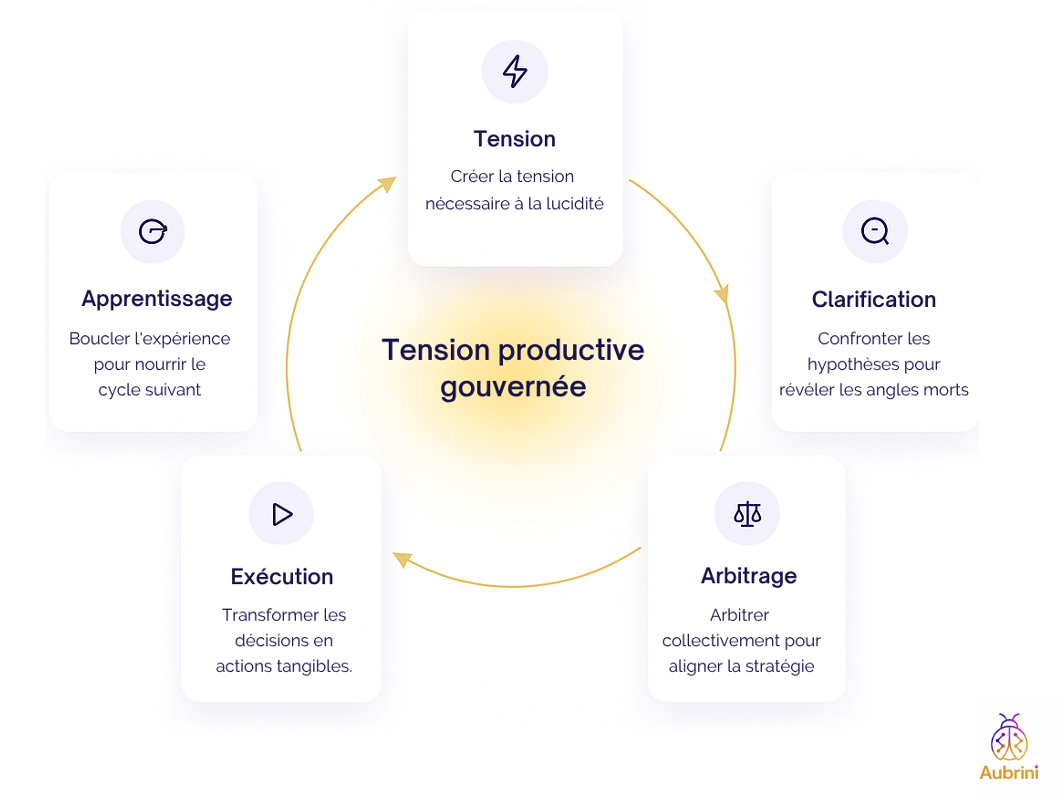
From trust to constructive friction
External directors stopped playing the role of "reassuring advisors" to become catalysts of strategic tension. Concretely, they:
- questioned overly conservative internal indicators,
- confronted management with weak market signals,
- challenged the product portfolio and growth assumptions,
- and proposed concrete alternatives (diversification, alliances, new offerings).
Tension governed, not endured
The board chair orchestrated this tension to turn it into productive friction: a space where disagreements become structuring decisions. Result:
- new strategic plan,
- recruitment of external expertise,
- redefinition of the scope of activity,
- and governance shifting from maintenance to transformation.
Key takeaway
Stress did not weaken governance: it made it more effective. The board's "stress inducer" role enabled the company to move from inherited inertia to a dynamic of strategic renewal. This is the same logic an Advisory Board can bring to a Go-to-Market in search of scalability.
Best practices for a "scalability-ready" Advisory Board
Ideal composition
- 4 to 6 external members with complementary profiles (market, finance, tech, compliance).
- Diversity of experience and neutrality of judgment.
Mandate and governance
- Clear mandate: advise, not decide.
- 4 to 6 meetings/year, focused on growth priorities.
- Structured follow-up: indicators, summaries, arbitration.
The implementation kit
| Objective | Means | Expected result |
|---|---|---|
| Clarify strategy | KPIs, reporting, Go/No Go sessions | Alignment between leadership and execution |
| Create productive tension | Arbitration sessions, external voices | Accelerated decisions |
| Structure growth | Processes, roles, ongoing evaluation | Controlled scalability |
Towards governed growth
Governance is not a constraint. It is an accelerator — one that turns tension into clarity and decision into momentum.
Companies that surround themselves with a strong, external Advisory Board gain a head start: they structure their growth, secure their execution and create sustainable value.
This is the model Aubrini champions: lucid, structured governance, in the service of leaders who want to move from reactive growth to mastered growth.
References: Snezana Zivcevska-Stalpers • La Fabrique by CA • Sievinen, Ikäheimonen & Pihkala (2019) – Journal of Management and Governance
At Aubrini, we help CEOs, Boards and investors turn regulatory requirements into levers for sustainable growth and enlightened governance.
Aubrini, your on-demand Chief Growth & Governance Office for organizations that want to align vision, execution and impact.
You may also like
Treasury management tools for SMBs: some players no longer seek to be the best, but the easiest to buy
Five observations drawn from fifteen players in France, the Netherlands and the UK to understand what truly structures competition beyond features.
Discover all our insights
Explore our complete library of articles, use cases, and strategic analyses on leadership, innovation, growth, and ecosystems.